Google UX Design Professional Certificate: How It Informed My Thinking on Intent-to-Income™
By Kittisak Pannutiyarak
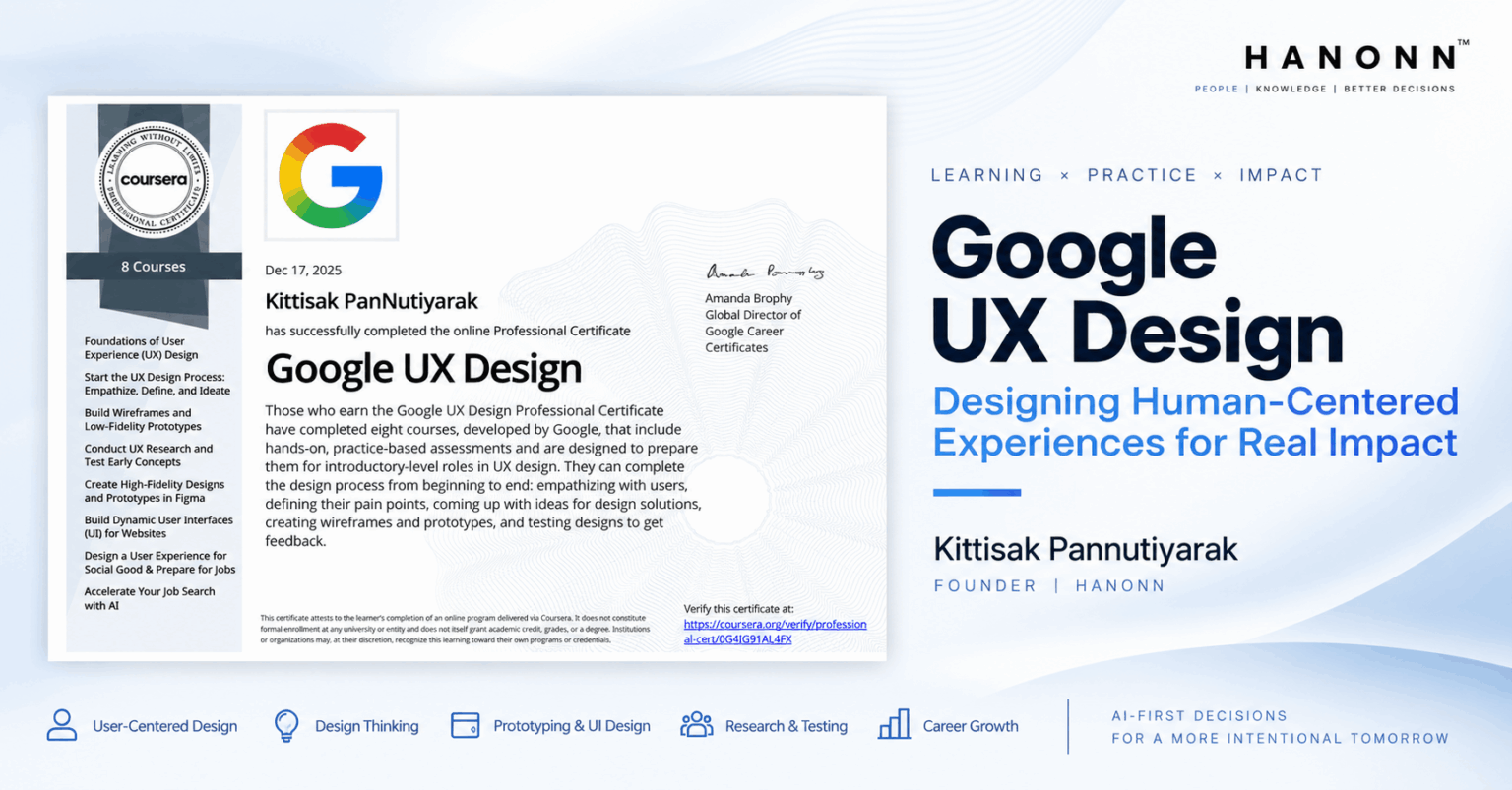
Google UX Design Professional Certificate เป็นหนึ่งในแหล่ง Applied Learning ที่ช่วยเสริมวิธีคิดของผมในการเริ่มจาก User Problem ผ่านการทำความเข้าใจผู้ใช้ การกำหนด Problem Statement การสร้าง Prototype และการตรวจสอบ Design Assumptions ด้วย User Research และ Usability Studies
ในบทความนี้ ผมนำแนวทางเหล่านี้มาใช้เป็น Research Lens ร่วมกับ Intent-to-Income™ เพื่อพิจารณาว่า Behavioral Signals และ User Statements ควรถูกใช้เป็น Research Evidence สำหรับทำความเข้าใจ Decision Context และสนับสนุนการตีความ Decision Need อย่างไร
- Research Before Inference:
พฤติกรรมและคำบอกเล่าของผู้ใช้เป็นหลักฐานส่วนหนึ่ง ไม่ใช่ข้อสรุปของ Decision Need โดยตรง - Frame the Problem Before Support:
ควรทำความเข้าใจ Decision Context, Pain Points และข้อจำกัด ก่อนออกแบบ Decision Support - Test Assumptions Before Claims:
Prototype และ Usability Study ช่วยตรวจสอบ Design Assumptions แต่ยังไม่ยืนยันว่า Decision Quality ดีขึ้น
Program Overview
Google UX Design Professional Certificate
-
- Program: Google UX Design Professional Certificate
- Provider: Google
- Program Type: 8-course Professional Certificate
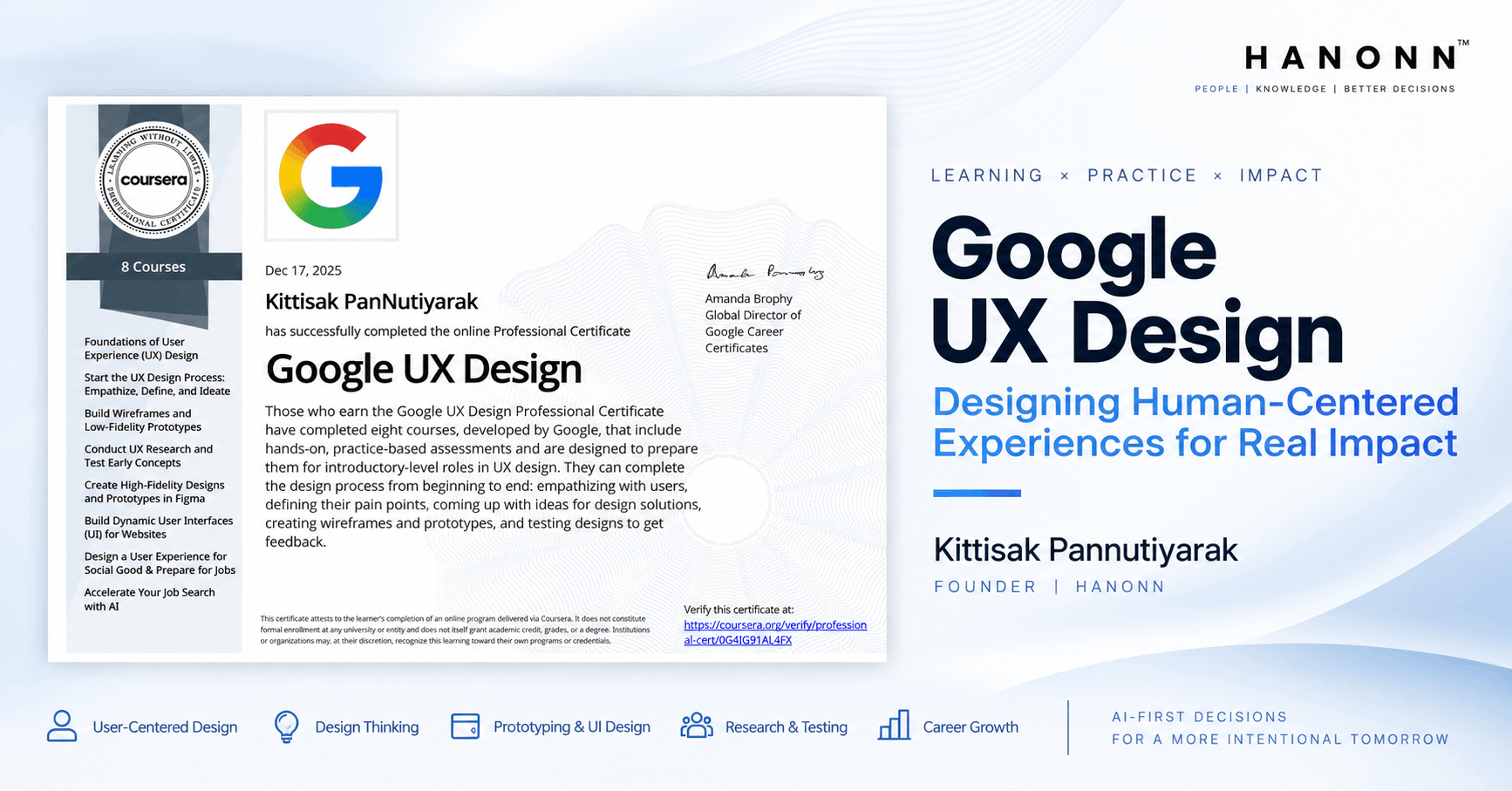
- Credential ID: 0G4IG91AL4FX
Course Structure
ครอบคลุมการทำความเข้าใจผู้ใช้ การกำหนดปัญหา การสร้าง Prototype การทำ Usability Studies และการปรับงานจาก Research Findings
Foundations of User Experience (UX) Design
พื้นฐาน User-centered Design, Design Process, Accessibility และ Equity-focused Design
Start the UX Design Process: Empathize, Define, and Ideate
ทำความเข้าใจผู้ใช้ Pain Points และ Context ก่อนพัฒนา Problem Statements และแนวทางแก้ปัญหา
Build Wireframes and Low-Fidelity Prototypes
แปลงแนวคิดเป็น Storyboards, Wireframes และ Low-fidelity Prototypes ที่สามารถนำไปตรวจสอบได้
Conduct UX Research and Test Early Concepts
วางแผน Usability Studies สังเคราะห์ Observations และนำ Research Findings ไปปรับ Early Concepts
Create High-Fidelity Designs and Prototypes in Figma
สร้าง Mockups และ High-fidelity Prototypes พร้อมใช้ Visual Principles, Design Systems และ Design Critique
Build Dynamic User Interfaces (UI) for Websites
ออกแบบ Information Architecture, Sitemap และ Responsive Interface สำหรับเว็บไซต์
Design a User Experience for Social Good & Prepare for Jobs
ประยุกต์ Design Process แบบ End-to-end กับโครงการเพื่อสังคม และพัฒนา Portfolio จากผลงานจริง
Accelerate Your Job Search with AI
ใช้เครื่องมือ AI ช่วยวางแผนการสมัครงาน พัฒนา Resume และเตรียมการสัมภาษณ์
Learning, Interpretation & Attribution Boundaries
ขอบเขตของ Course, Author Synthesis และ Validation
Professional Certificate และ Course Materials ที่กล่าวถึงในบทความนี้ใช้เป็น Learning Evidence ของผู้เขียน
Intent-to-Income™ เป็น proprietary Reference Decision Architecture ที่ออกแบบโดย Kittisak Pannutiyarak และพัฒนาต่อภายใต้ HaNonn ไม่ได้เป็น Framework ที่พัฒนาโดย Google หรือ Coursera
Research-to-Decision Traceability, Research Coverage, Testable Assumption Template และตารางการประยุกต์กับ HaNonn Decision Composer™ เป็นการสังเคราะห์ของผู้เขียน ไม่ใช่ Framework ของ Google และไม่ใช่ Core Component ใหม่ของ Intent-to-Income™
คำว่า Research-informed ไม่ได้หมายความว่า User-validated การยืนยันผลต้องอาศัย Evaluation Protocol, Participants, Operational Definitions และข้อมูลจากการทดสอบจริง
Coursera แสดงหลักสูตรเป็น 8-course series ขณะที่ Google ระบุว่า Accelerate Your Job Search with AI เป็น Optional Career-support Course จึงไม่ได้ใช้ Course นี้เป็นรากฐานทางแนวคิดของบทความ
User Research & Decision Context
User Behavior ≠ Decision Need
Clicks, Searches, Navigation Paths และ Interactions ช่วยให้เห็นว่าผู้ใช้ทำอะไร แต่ไม่ได้อธิบายทั้งหมดว่าผู้ใช้กำลังพยายามตัดสินใจเรื่องใด มีข้อจำกัดอะไร หรือยังขาดข้อมูลใด
User Research ช่วยเพิ่มหลักฐานเกี่ยวกับ Goals, Pain Points และ Context ผ่าน Interviews, Observation, Personas และ Journey Maps อย่างไรก็ตาม Research Findings ยังคงเป็นหลักฐานสำหรับการตีความ ไม่ใช่คำตอบของ Decision Need โดยตรง
จาก Research Evidence สู่ Proposed Decision Need
คุณค่าของ User Research ไม่ได้อยู่ที่จำนวน Interviews หรือ Research Notes เพียงอย่างเดียว แต่อยู่ที่ความสามารถในการสืบย้อนว่า Observation ใดสนับสนุนการตีความใด และการตีความนั้นถูกนำไปใช้กับ Decision Support อย่างไร
การรักษา Traceability ช่วยแยกสิ่งที่ผู้ใช้กล่าว สิ่งที่สังเกตพบ และข้อสรุปของทีมออกจากกัน พร้อมเปิดให้ตรวจสอบคำอธิบายอื่นที่อาจเป็นไปได้
Research Evidence
Interpretation
Proposed Decision Need
Decision Support
Evaluation
| Research Input | สิ่งที่ช่วยให้เข้าใจ | การนำไปใช้ | ขอบเขตการตีความ |
|---|---|---|---|
| Interviews & User Statements | Goals, Pain Points และ Constraints ที่ผู้ใช้รายงาน | เสนอ Context, Criteria หรือข้อมูลที่ผู้ใช้อาจต้องการ | เป็น Self-reported Evidence และอาจไม่ตรงกับพฤติกรรม |
| Observed Behavior | การกระทำ ลำดับการใช้งาน และจุดติดขัด | ระบุ Friction หรือจุดที่อาจต้องมี Decision Support | แสดงสิ่งที่เกิดขึ้น แต่ไม่อธิบายเหตุผลโดยตรง |
| Personas & Journey Maps | Patterns ที่สังเคราะห์จาก Research Findings | ช่วยจัด Context และตั้ง Design Hypotheses | เป็น Research Artifacts ไม่ใช่ตัวแทนของผู้ใช้ทุกคน |
| Usability Findings | ปัญหาด้านความเข้าใจ Navigation และ Interaction | ใช้ปรับ Content, Prototype และ Decision Interface | Usability Evidence ไม่ใช่หลักฐานของ Decision Quality |
Minimum Evidence Record ↓
เพื่อรักษา Traceability ควรบันทึก
- แหล่งที่มาของ Observation หรือ User Statement
- ประเภทของ Evidence และบริบทที่เก็บข้อมูล
- การตีความและคำอธิบายอื่นที่อาจเป็นไปได้
- Proposed Decision Need หรือ Design Implication
- สถานะ: Proposed, Confirmed, Not Supported หรือ Not Tested
Prototype & Research
ใช้ Prototype ตรวจสอบ Design Assumptions
Prototype ทำให้ข้อสมมติด้านการออกแบบอยู่ในรูปที่สามารถนำไปทดสอบได้ เช่น ผู้ใช้จะค้นหา Criteria พบหรือไม่ เข้าใจ Evidence อย่างไร และสามารถเปรียบเทียบ Alternatives ตาม Priorities ของตนได้หรือไม่
ในบริบทของ Intent-to-Income™ จุดประสงค์จึงไม่ใช่เพียงตรวจว่า Interface ใช้งานได้ แต่รวมถึงการค้นหาว่า Decision Support ตั้งอยู่บนสมมติฐานใด และหลักฐานจากผู้ใช้สนับสนุนหรือขัดแย้งกับสมมติฐานนั้นอย่างไร
Testable Assumption Template ↓
- Assumption: เราเชื่อว่าผู้ใช้ต้องเข้าใจหรือทำอะไร
- Task: ผู้ใช้จะได้รับโจทย์ให้ทำอะไรผ่าน Prototype
- Observable Signal: พฤติกรรมใดจะแสดงว่าเข้าใจหรือติดขัด
- Interpretation Rule: หลักฐานใดสนับสนุนหรือขัดแย้งกับสมมติฐาน
- Revision: จะปรับ Decision Support หรือ Interface ตรงจุดใด
Research Coverage & Inclusion
Research ที่ไม่ครอบคลุมอาจทำให้ Decision Support ไม่สะท้อนผู้ใช้บางกลุ่ม
ขอบเขตของ Research Findings ขึ้นอยู่กับผู้เข้าร่วม สถานการณ์ อุปกรณ์ และข้อจำกัดของการศึกษา หาก Research ไม่ครอบคลุมผู้ใช้บางกลุ่ม Pain Points หรือ Decision Criteria ที่สำคัญอาจไม่ปรากฏในผลการวิเคราะห์
ใน Decision Intelligence ประเด็นนี้ไม่ใช่เพียง Accessibility ของ Interface แต่รวมถึงความเสี่ยงที่ Decision Support จะอ้างอิง Context แคบกว่าการใช้งานจริง
Coverage Record
- ผู้ใช้และ Decision Context ที่อยู่ในการศึกษา
- สถานการณ์ อุปกรณ์ และ Access Needs ที่ถูกทดสอบ
- ผู้ใช้หรือ Context ที่ยังไม่ได้ศึกษา
- ข้อจำกัดของ Research และ Findings ที่ยังไม่ควรนำไปใช้กับกลุ่มอื่น
Application Perspective
Google UX Design กับ HaNonn Decision Composer™
หลักคิดด้าน User Research, Problem Framing และ Usability Testing ใช้เป็น Research Lens สำหรับตรวจสอบว่า HaNonn Decision Composer™ เข้าใจ Context ของผู้ใช้อย่างไร และ Decision Support Blueprint ที่สร้างขึ้นสามารถถูกตรวจสอบและนำไปใช้ได้หรือไม่
การประยุกต์นี้ไม่ได้ถือว่า Research Finding คือ Decision Need โดยตรง แต่ใช้หลักฐานจากผู้ใช้เพื่อตรวจสอบการตีความของระบบ ค้นหา Friction และปรับ Design Assumptions ในแต่ละช่วงของ Application
| Application Area | คำถามที่ใช้ตรวจสอบ | ตัวอย่าง Evidence |
|---|---|---|
| Confirm Understanding | ผู้ใช้มองเห็นและแก้ไข Context รวมถึงเข้าใจขอบเขตของระบบได้หรือไม่ | Context corrections, expectation mismatch และจุดที่เข้าใจคลาดเคลื่อน |
| Decision Priorities | ผู้ใช้สามารถระบุ Criteria, Constraints และ Priorities ที่มีความหมายกับตนได้หรือไม่ | Criteria ที่เพิ่ม ตัด ปรับลำดับ หรือยังไม่สามารถระบุได้ |
| Decision Support Blueprint | ผู้ใช้สามารถตรวจสอบ Claims, Evidence, Alternatives และ Trade-offs ได้หรือไม่ | Evidence-tracing, Comparison Tasks และจุดที่ต้องขอข้อมูลเพิ่ม |
| Evaluation & Feedback | ผู้ใช้ใช้หรือไม่ใช้ Decision Support ส่วนใด และเพราะเหตุใด | Observed Behavior, User Feedback, Next Step และ Unresolved Questions |
ตารางนี้แสดงคำถามและหลักฐานที่ควรเก็บ ไม่ใช่ผลการทดสอบของ Application
REFLECTION
บทสรุป: จาก User Research สู่ Decision Support ที่ตรวจสอบได้
Google UX Design ช่วยเสริมวิธีคิดในการเริ่มจาก User Problem แยก Observation ออกจาก Interpretation และใช้ Prototype ตรวจสอบ Design Assumptions ก่อนนำไปพัฒนาระบบจริง
ภายใน Intent-to-Income™ หลักคิดเหล่านี้ใช้ประกอบการทำความเข้าใจ Decision Context และ Proposed Decision Need โดยรักษา Traceability จาก Research Evidence ไปยัง Decision Support พร้อมระบุสิ่งที่ยังไม่ทราบหรือยังไม่ได้รับการตรวจสอบ
User research does not remove inference; it makes assumptions visible and testable.
Can you trace your decision support back to user evidence?
หากระบบใช้ Behavioral Signals หรือ User Feedback เพื่อตีความ Decision Need แต่ไม่สามารถสืบย้อนได้ว่าการตีความนั้นมาจาก Evidence ใด ปัญหาอาจอยู่ที่ช่องว่างระหว่าง User Research กับ Decision Need
About the Author:
กิตติศักดิ์ ปณณัติยารักษ์
(Kittisak Pannutiyarak)
ผู้ก่อตั้ง HaNonn และผู้ออกแบบ Intent-to-Income™ ซึ่งเป็น proprietary Reference Decision Architecture สำหรับจัดโครงสร้างและประยุกต์ใช้ Decision Support ภายใน AI-first Decision Intelligence